模式
本页基于 Anthropic 关于构建高效 agent 的模式 ↗,列出并定义了实现 AI agent 的常见模式。
代码示例使用 AI SDK ↗,运行在 Durable Objects 之上。
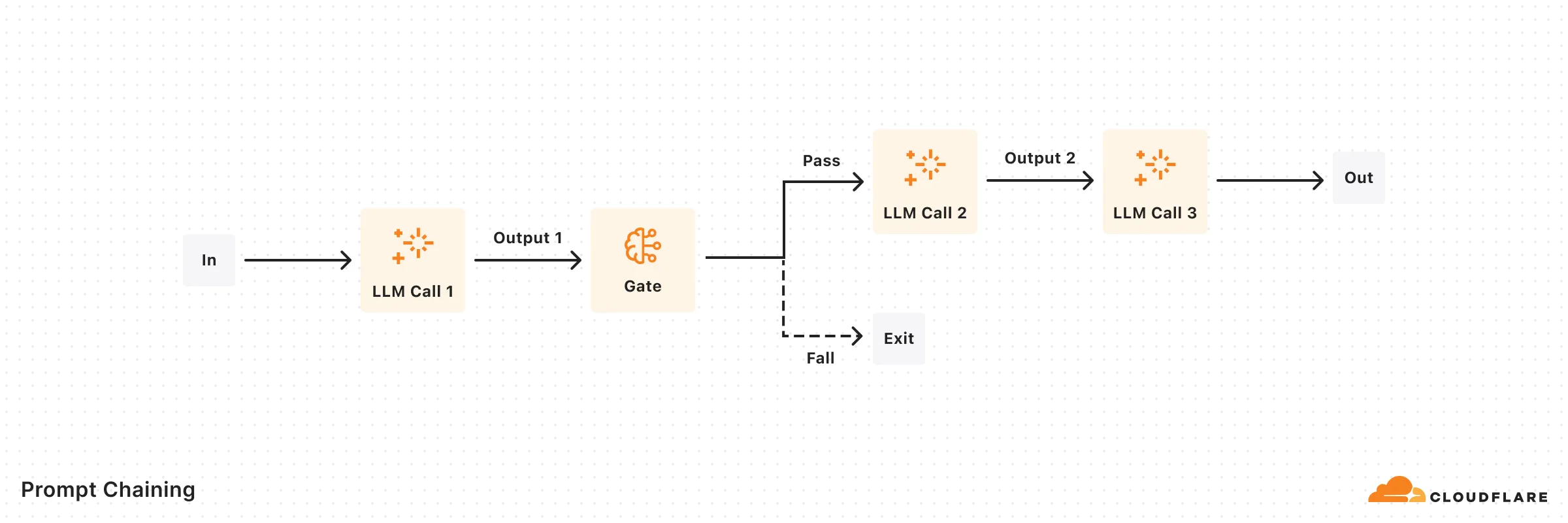
提示链 (Prompt Chaining)
把任务分解为一系列步骤,每次 LLM 调用处理上一步的输出。
TypeScript
import { openai } from "@ai-sdk/openai";

import { generateText, generateObject } from "ai";

import { z } from "zod";


export default async function generateMarketingCopy(input: string) {

  const model = openai("gpt-4o");


  // First step: Generate marketing copy

  const { text: copy } = await generateText({

    model,

    prompt: `Write persuasive marketing copy for: ${input}. Focus on benefits and emotional appeal.`,

  });


  // Perform quality check on copy

  const { object: qualityMetrics } = await generateObject({

    model,

    schema: z.object({

      hasCallToAction: z.boolean(),

      emotionalAppeal: z.number().min(1).max(10),

      clarity: z.number().min(1).max(10),

    }),

    prompt: `Evaluate this marketing copy for:

    1. Presence of call to action (true/false)

    2. Emotional appeal (1-10)

    3. Clarity (1-10)


    Copy to evaluate: ${copy}`,

  });


  // If quality check fails, regenerate with more specific instructions

  if (

    !qualityMetrics.hasCallToAction ||

    qualityMetrics.emotionalAppeal < 7 ||

    qualityMetrics.clarity < 7

  ) {

    const { text: improvedCopy } = await generateText({

      model,

      prompt: `Rewrite this marketing copy with:

      ${!qualityMetrics.hasCallToAction ? "- A clear call to action" : ""}

      ${qualityMetrics.emotionalAppeal < 7 ? "- Stronger emotional appeal" : ""}

      ${qualityMetrics.clarity < 7 ? "- Improved clarity and directness" : ""}


      Original copy: ${copy}`,

    });

    return { copy: improvedCopy, qualityMetrics };

  }


  return { copy, qualityMetrics };

}
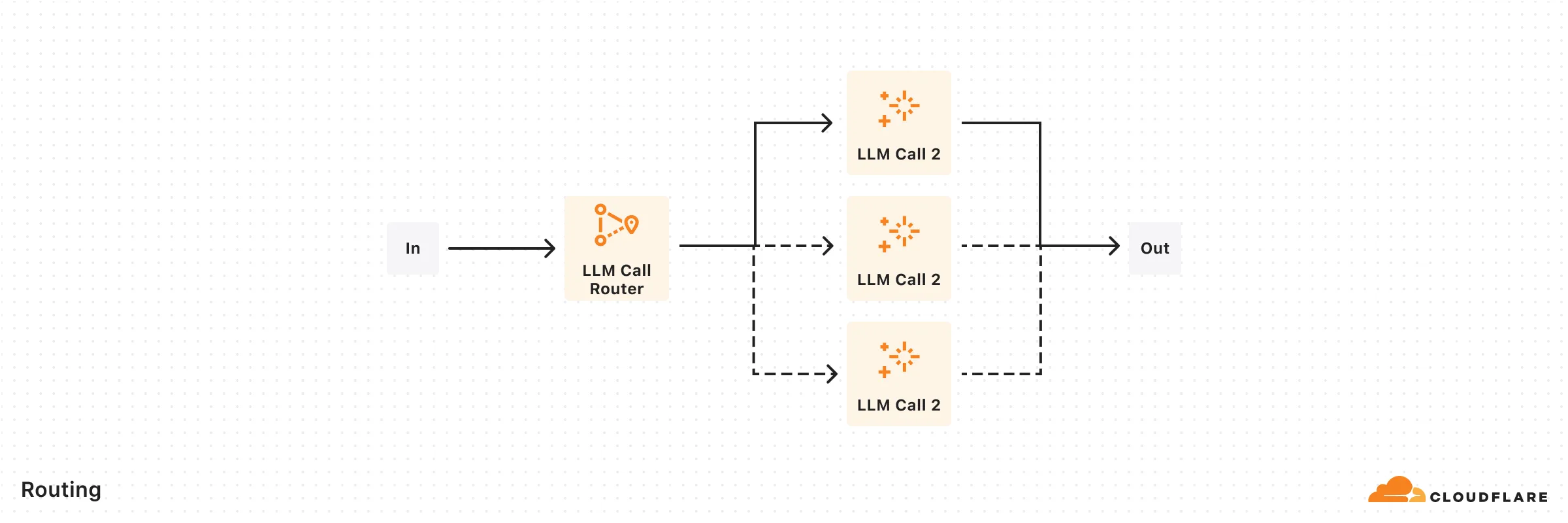
路由 (Routing)
对输入进行分类,把它分发到专门的后续任务,实现关注点分离。
TypeScript
import { openai } from '@ai-sdk/openai';

import { generateObject, generateText } from 'ai';

import { z } from 'zod';


async function handleCustomerQuery(query: string) {

  const model = openai('gpt-4o');


  // First step: Classify the query type

  const { object: classification } = await generateObject({

    model,

    schema: z.object({

      reasoning: z.string(),

      type: z.enum(['general', 'refund', 'technical']),

      complexity: z.enum(['simple', 'complex']),

    }),

    prompt: `Classify this customer query:

    ${query}


    Determine:

    1. Query type (general, refund, or technical)

    2. Complexity (simple or complex)

    3. Brief reasoning for classification`,

  });


  // Route based on classification

  // Set model and system prompt based on query type and complexity

  const { text: response } = await generateText({

    model:

      classification.complexity === 'simple'

        ? openai('gpt-4o-mini')

        : openai('o1-mini'),

    system: {

      general:

        'You are an expert customer service agent handling general inquiries.',

      refund:

        'You are a customer service agent specializing in refund requests. Follow company policy and collect necessary information.',

      technical:

        'You are a technical support specialist with deep product knowledge. Focus on clear step-by-step troubleshooting.',

    }[classification.type],

    prompt: query,

  });


  return { response, classification };

}
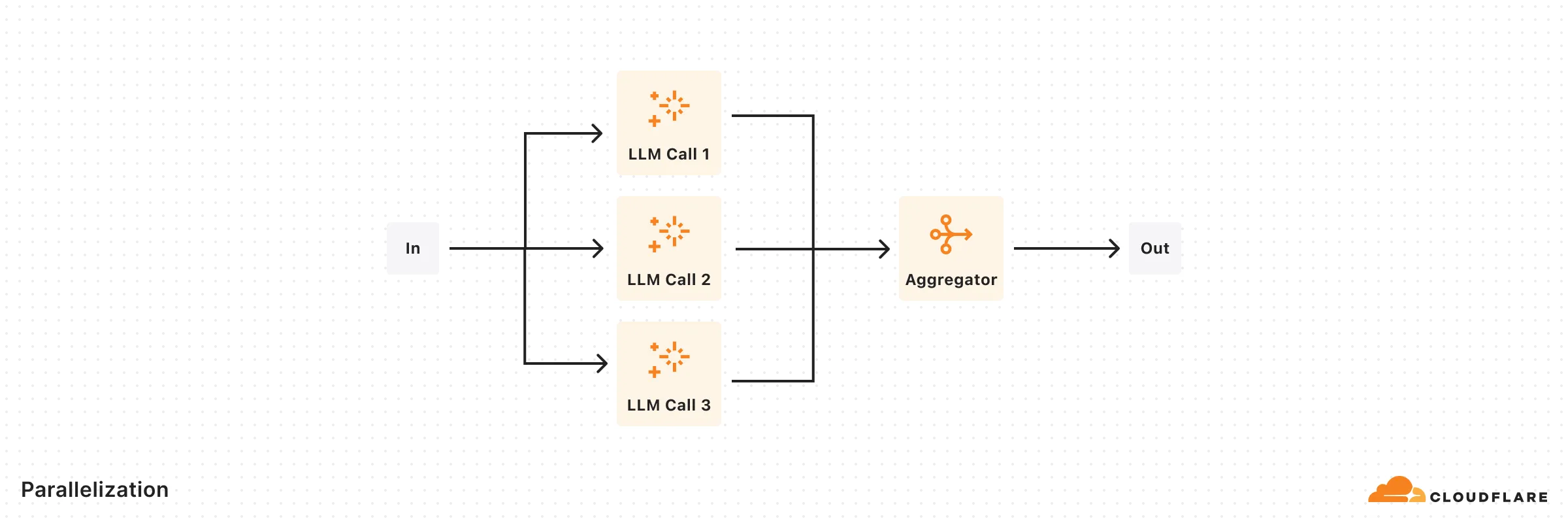
并行化 (Parallelization)
通过分块或投票机制,实现任务的同时处理。
TypeScript
import { openai } from '@ai-sdk/openai';

import { generateText, generateObject } from 'ai';

import { z } from 'zod';


// Example: Parallel code review with multiple specialized reviewers

async function parallelCodeReview(code: string) {

  const model = openai('gpt-4o');


  // Run parallel reviews

  const [securityReview, performanceReview, maintainabilityReview] =

    await Promise.all([

      generateObject({

        model,

        system:

          'You are an expert in code security. Focus on identifying security vulnerabilities, injection risks, and authentication issues.',

        schema: z.object({

          vulnerabilities: z.array(z.string()),

          riskLevel: z.enum(['low', 'medium', 'high']),

          suggestions: z.array(z.string()),

        }),

        prompt: `Review this code:

      ${code}`,

      }),


      generateObject({

        model,

        system:

          'You are an expert in code performance. Focus on identifying performance bottlenecks, memory leaks, and optimization opportunities.',

        schema: z.object({

          issues: z.array(z.string()),

          impact: z.enum(['low', 'medium', 'high']),

          optimizations: z.array(z.string()),

        }),

        prompt: `Review this code:

      ${code}`,

      }),


      generateObject({

        model,

        system:

          'You are an expert in code quality. Focus on code structure, readability, and adherence to best practices.',

        schema: z.object({

          concerns: z.array(z.string()),

          qualityScore: z.number().min(1).max(10),

          recommendations: z.array(z.string()),

        }),

        prompt: `Review this code:

      ${code}`,

      }),

    ]);


  const reviews = [

    { ...securityReview.object, type: 'security' },

    { ...performanceReview.object, type: 'performance' },

    { ...maintainabilityReview.object, type: 'maintainability' },

  ];


  // Aggregate results using another model instance

  const { text: summary } = await generateText({

    model,

    system: 'You are a technical lead summarizing multiple code reviews.',

    prompt: `Synthesize these code review results into a concise summary with key actions:

    ${JSON.stringify(reviews, null, 2)}`,

  });


  return { reviews, summary };

}
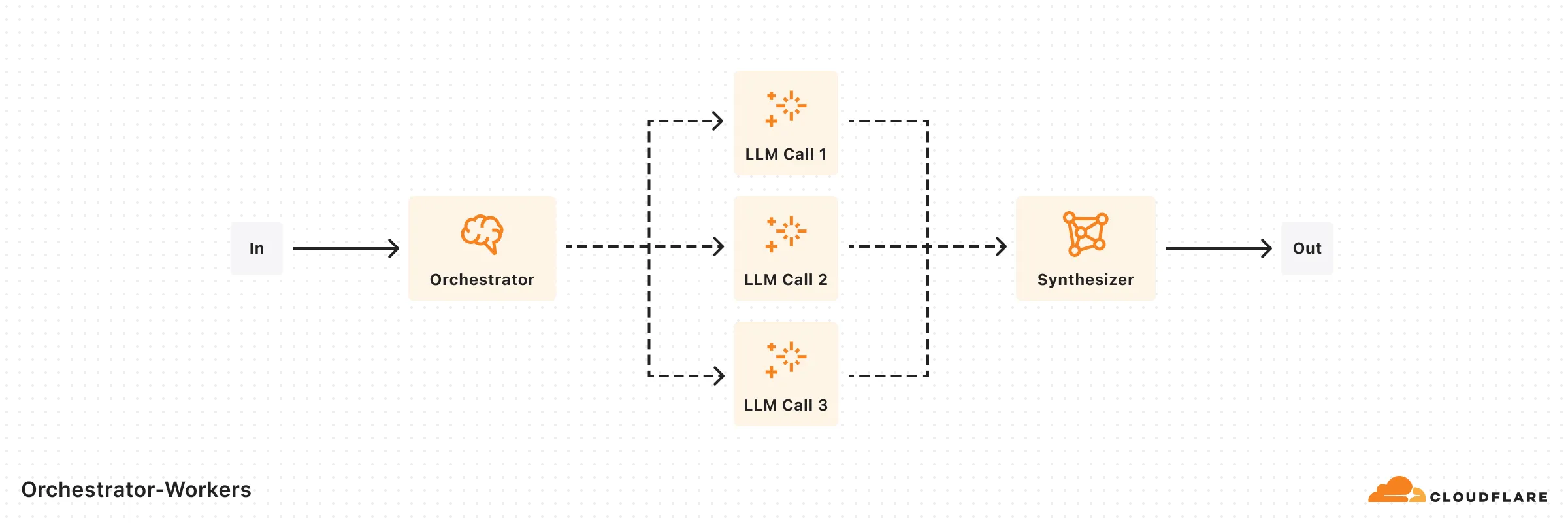
Orchestrator-Workers
一个中央 LLM 动态地分解任务,将任务委派给 Worker LLM,然后再综合结果。
TypeScript
import { openai } from '@ai-sdk/openai';

import { generateObject } from 'ai';

import { z } from 'zod';


async function implementFeature(featureRequest: string) {

  // Orchestrator: Plan the implementation

  const { object: implementationPlan } = await generateObject({

    model: openai('o1'),

    schema: z.object({

      files: z.array(

        z.object({

          purpose: z.string(),

          filePath: z.string(),

          changeType: z.enum(['create', 'modify', 'delete']),

        }),

      ),

      estimatedComplexity: z.enum(['low', 'medium', 'high']),

    }),

    system:

      'You are a senior software architect planning feature implementations.',

    prompt: `Analyze this feature request and create an implementation plan:

    ${featureRequest}`,

  });


  // Workers: Execute the planned changes

  const fileChanges = await Promise.all(

    implementationPlan.files.map(async file => {

      // Each worker is specialized for the type of change

      const workerSystemPrompt = {

        create:

          'You are an expert at implementing new files following best practices and project patterns.',

        modify:

          'You are an expert at modifying existing code while maintaining consistency and avoiding regressions.',

        delete:

          'You are an expert at safely removing code while ensuring no breaking changes.',

      }[file.changeType];


      const { object: change } = await generateObject({

        model: openai('gpt-4o'),

        schema: z.object({

          explanation: z.string(),

          code: z.string(),

        }),

        system: workerSystemPrompt,

        prompt: `Implement the changes for ${file.filePath} to support:

        ${file.purpose}


        Consider the overall feature context:

        ${featureRequest}`,

      });


      return {

        file,

        implementation: change,

      };

    }),

  );


  return {

    plan: implementationPlan,

    changes: fileChanges,

  };

}
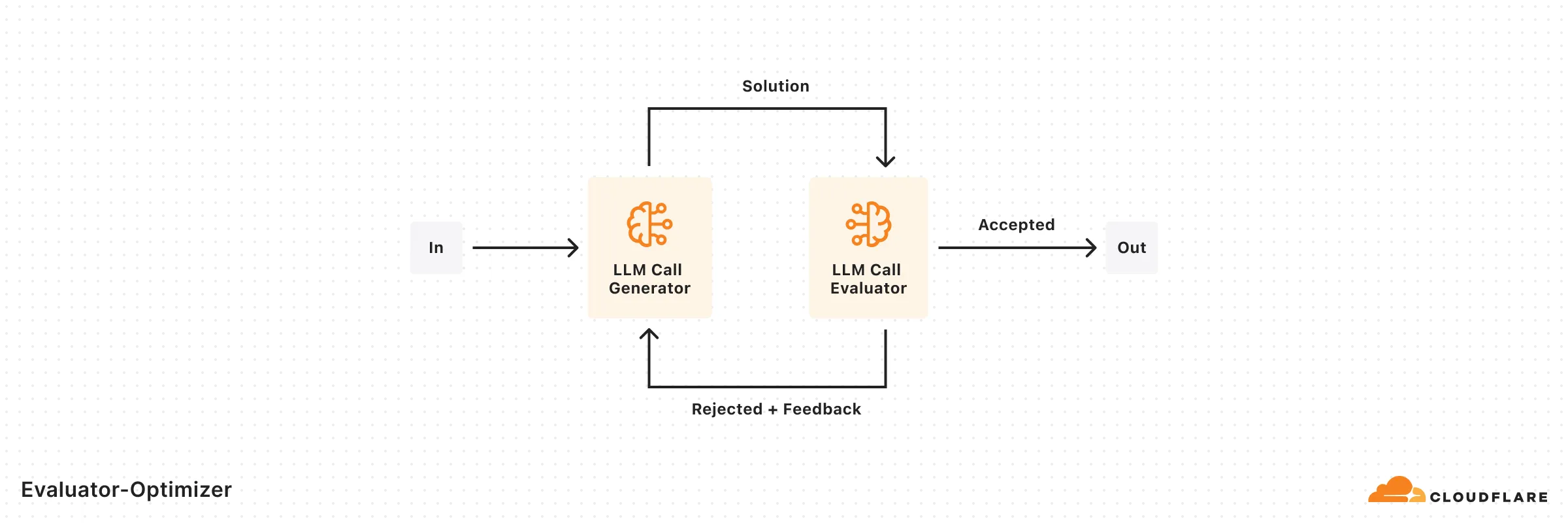
Evaluator-Optimizer
一个 LLM 生成响应,另一个 LLM 在循环中进行评估并提供反馈。
TypeScript
import { openai } from '@ai-sdk/openai';

import { generateText, generateObject } from 'ai';

import { z } from 'zod';


async function translateWithFeedback(text: string, targetLanguage: string) {

  let currentTranslation = '';

  let iterations = 0;

  const MAX_ITERATIONS = 3;


  // Initial translation

  const { text: translation } = await generateText({

    model: openai('gpt-4o-mini'), // use small model for first attempt

    system: 'You are an expert literary translator.',

    prompt: `Translate this text to ${targetLanguage}, preserving tone and cultural nuances:

    ${text}`,

  });


  currentTranslation = translation;


  // Evaluation-optimization loop

  while (iterations < MAX_ITERATIONS) {

    // Evaluate current translation

    const { object: evaluation } = await generateObject({

      model: openai('gpt-4o'), // use a larger model to evaluate

      schema: z.object({

        qualityScore: z.number().min(1).max(10),

        preservesTone: z.boolean(),

        preservesNuance: z.boolean(),

        culturallyAccurate: z.boolean(),

        specificIssues: z.array(z.string()),

        improvementSuggestions: z.array(z.string()),

      }),

      system: 'You are an expert in evaluating literary translations.',

      prompt: `Evaluate this translation:


      Original: ${text}

      Translation: ${currentTranslation}


      Consider:

      1. Overall quality

      2. Preservation of tone

      3. Preservation of nuance

      4. Cultural accuracy`,

    });


    // Check if quality meets threshold

    if (

      evaluation.qualityScore >= 8 &&

      evaluation.preservesTone &&

      evaluation.preservesNuance &&

      evaluation.culturallyAccurate

    ) {

      break;

    }


    // Generate improved translation based on feedback

    const { text: improvedTranslation } = await generateText({

      model: openai('gpt-4o'), // use a larger model

      system: 'You are an expert literary translator.',

      prompt: `Improve this translation based on the following feedback:

      ${evaluation.specificIssues.join('\n')}

      ${evaluation.improvementSuggestions.join('\n')}


      Original: ${text}

      Current Translation: ${currentTranslation}`,

    });


    currentTranslation = improvedTranslation;

    iterations++;

  }


  return {

    finalTranslation: currentTranslation,

    iterationsRequired: iterations,

  };

}